
Loyalty Coin (LOLLY)


Unlocking the Next Era of Hospitality Rewards


Loyalty Coin “LOLLY” - A global loyalty infrastructure for modern travel commerce

1. Introduction

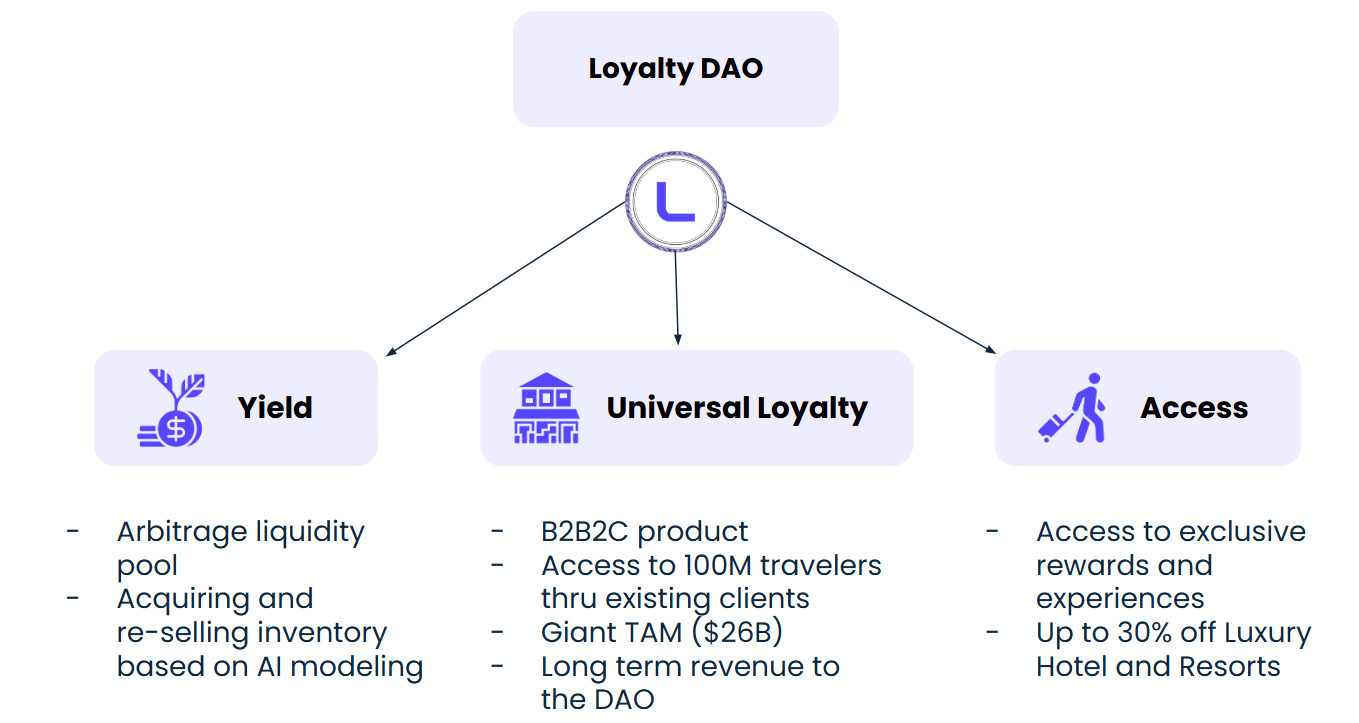
Loyalty Coin introduces a decentralized infrastructure that benefits travelers, corporate subscribers, and token holders alike. By leveraging proprietary technology and existing strategic partnerships with established travel industry leaders, LOLLY offers two primary drivers of value: the Arbitrage Yield Strategy and a Universal Loyalty Product.

The Arbitrage Yield Strategy can generate substantial returns by acquiring and reselling travel ahead of high-demand events. The strategy relies on proprietary databases and AI agents to identify global events (such as conferences and concerts) in markets where demand for hotel rooms will greatly exceed the available supply of room nights. Our databases also track nightly historical room prices by market over the past 5 years, enabling AI agents to identify attractive opportunities to pre-purchase room blocks 4-6 months ahead of the event. The protocol will deploy event-specific investment pools, accessible exclusively to LOLLY holders meeting a defined minimum threshold. Smart contracts govern the full lifecycle — from capital calls through to return distribution — eliminating the need for intermediaries. The inaugural pool will launch concurrently with the Token Generation Event.

The Universal Loyalty Product is a B2B platform sold to global clients, including fintechs, superapps, ecommerce platforms, and travel membership clubs. This product uses blockchain technology to enable global travel sellers to launch their own self-branded loyalty rewards program (essentially, cash-back rewards on travel sold, with the blockchain serving as a ledger for rewards tracking, distribution, and settlement). The loyalty product will capitalize on built-in demand from the customer base of its launch partner, Xeni Inc. Xeni is a white-label travel technology platform with an existing, live API subscriber base of global large-cap companies. Collectively, these subscribers bring an audience of over 100+ million users (“travelers”). These subscribers have demanded a self-branded, fungible, and customizable rewards & loyalty program fully integrated with their travel booking ecosystem.

The simple, cash-back rewards program is fungible across inventory categories, including flights, hotels, activities, events, and ground transportation. Instead of needing to collect Hilton points to redeem at a Hilton hotel, for example, a traveler can collect “Qatar Insurance Company” Points when they buy travel on QIC’s travel app, and redeem them at Hilton, American Airlines, Hertz, or millions of other properties.

The Travel Loyalty Innovation Market is estimated at $12.5B globally - a massive TAM. Loyalty DAO will earn a fee on all points redeemed across its platform. It will also use the reach of 100M travelers to distribute Lolly Coin worldwide by gifting a LOLLY into 'travelers' wallets alongside their cash-back reward points.

Exhibit 1: Overview of the Loyalty DAO
2. Loyalty Coin Overview

2a. LOLLY Coin

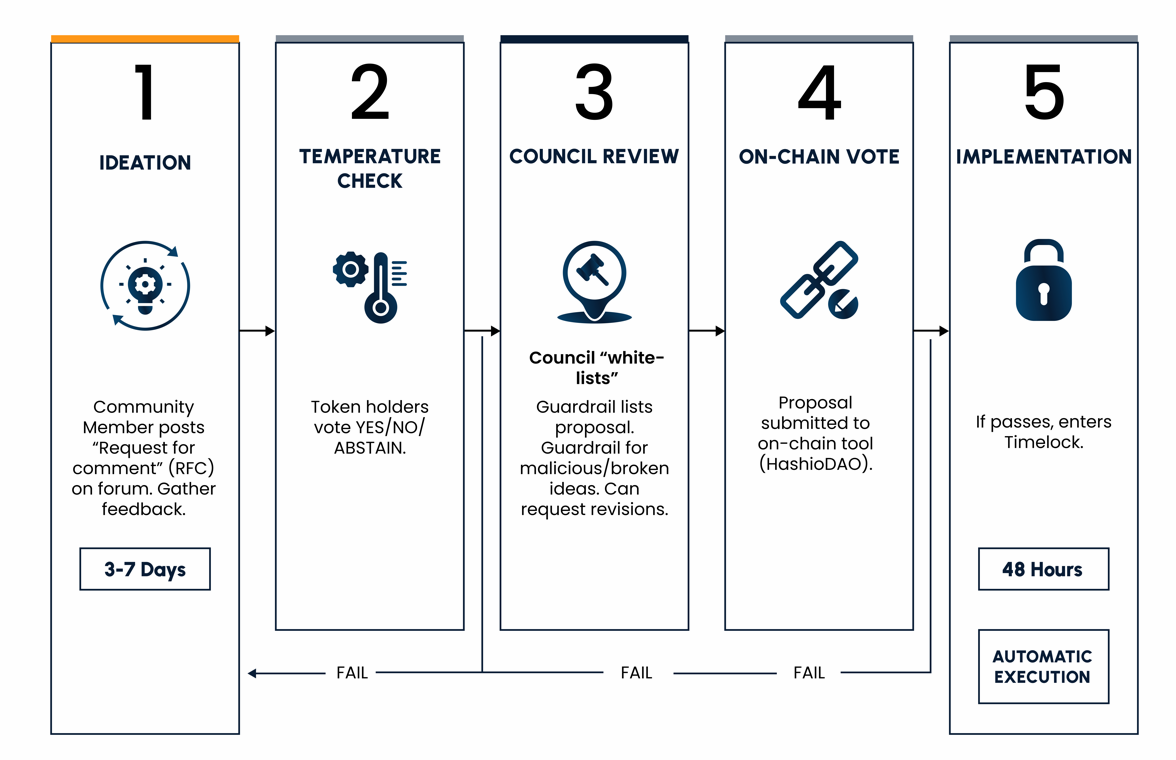
LOLLY serves as the foundational access and governance token for the Loyalty DAO. As the economic beneficiaries of the rewards ecosystem, LOLLY holders shape the protocol's strategic direction through on-chain governance, including decisions on redemption economics, partner onboarding, and treasury allocation.

2b. Governance

LOLLY holders govern a travel industry rewards and loyalty program and oversee the issuance and redemption of on-chain reward points.

  • Voting rights: LOLLY holders can determine the parameters and extent of DAO business activities, including operations, development, and growth initiatives (e.g., grant funding).
  • Treasury management: determine uses of LOLLY treasury, including funding initiatives.  

Exhibit 2: Governance Flow
2c. Holder benefits and staking

The LOLLY coin holder benefits strategy is designed to incentivize participation, govern system economics, and provide tangible benefits to LOLLY holders.

  • Arbitrage Pool Access: To participate in inventory arbitrage pools, investors must stake LOLLY equivalent to 1/10th of their USD investment.
  • Wholesale Travel Access: Staking a minimum of 10,000 LOLLY grants holders access to wholesale-rate travel inventory and exclusive private club memberships.
  • Unique travel experiences: Holders may elect to return coins to the treasury in exchange for unique, high-value travel experiences

3. Arbitrage Liquidity Pool

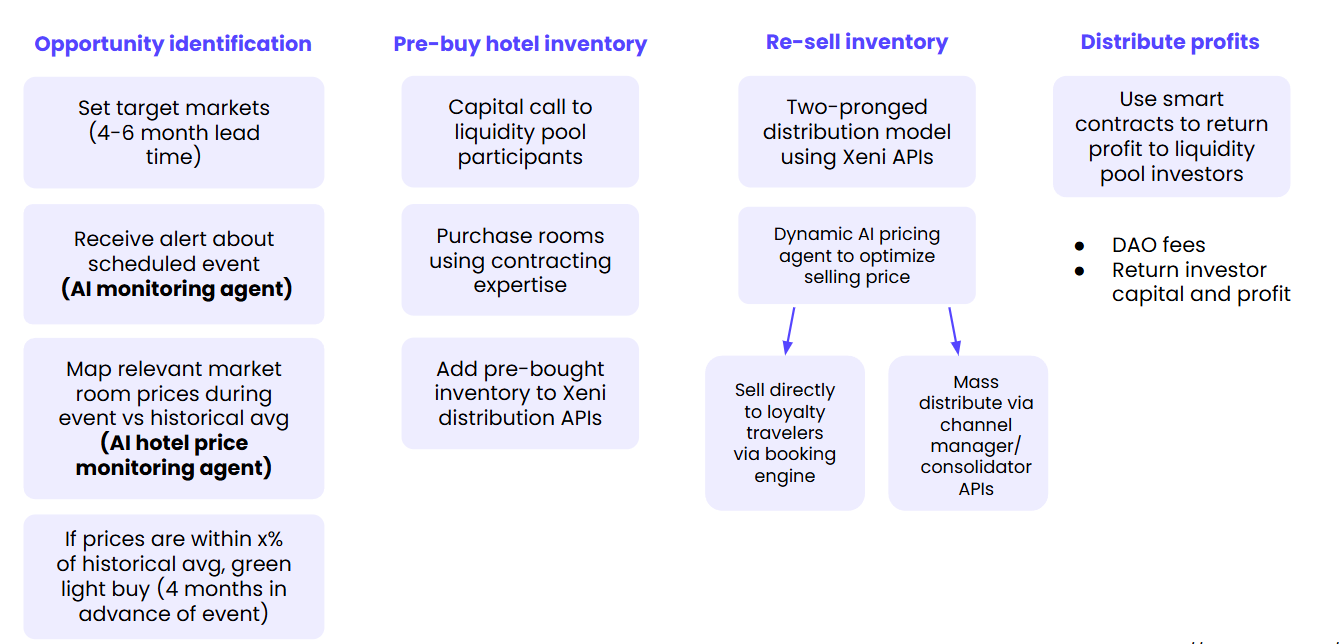
The Arbitrage Liquidity Pool by Lollycoin identifies and capitalizes on high-demand market “spikes” where hotel room rates soar during major events, such as SXSW, the F1 Grand Prix, or international sports finals. The process begins with AI monitoring and modeling to identify target markets and map current room prices against historical averages.

Once an opportunity is green-lit, the pool issues a capital call to participants to pre-buy inventory, with the purchase administered by the DAO contracting function.

These rooms are then resold through mainstream travel distribution channels (inventory distributed via API to industry-leading inventory consolidators) — with final profits distributed back to investors via smart contracts. Pool participants fund the pool in USD and achieve a realized return at the conclusion of the strategy.

The mechanisms employed by the pool overcome historical obstacles to arbitrage room rates. By combining high-quality data sets with AI modeling, the pool can continuously identify and green-light attractive investment opportunities worldwide. The use of smart contracts can facilitate seamless conduct of capital calls, fund the contracts when minimum threshold investment levels have been reached, and distribute returns to investors. By deploying experienced hotel contracting professionals, the pool can ensure outstanding rates, flexible reselling terms, and cancellation risk management. Finally, by leveraging its partnership with a global travel technology platform, the pool can upload its proprietary contracts (prebought inventory) to the world’s largest hotel inventory consolidators for global distribution.

Exhibit 3: Arbitrage Liquidity Pool (ALP): Travel demand and supply arbitrage model
A diagram of a flowchart
                
                AI-generated content may be incorrect.

4. Universal Loyalty Product

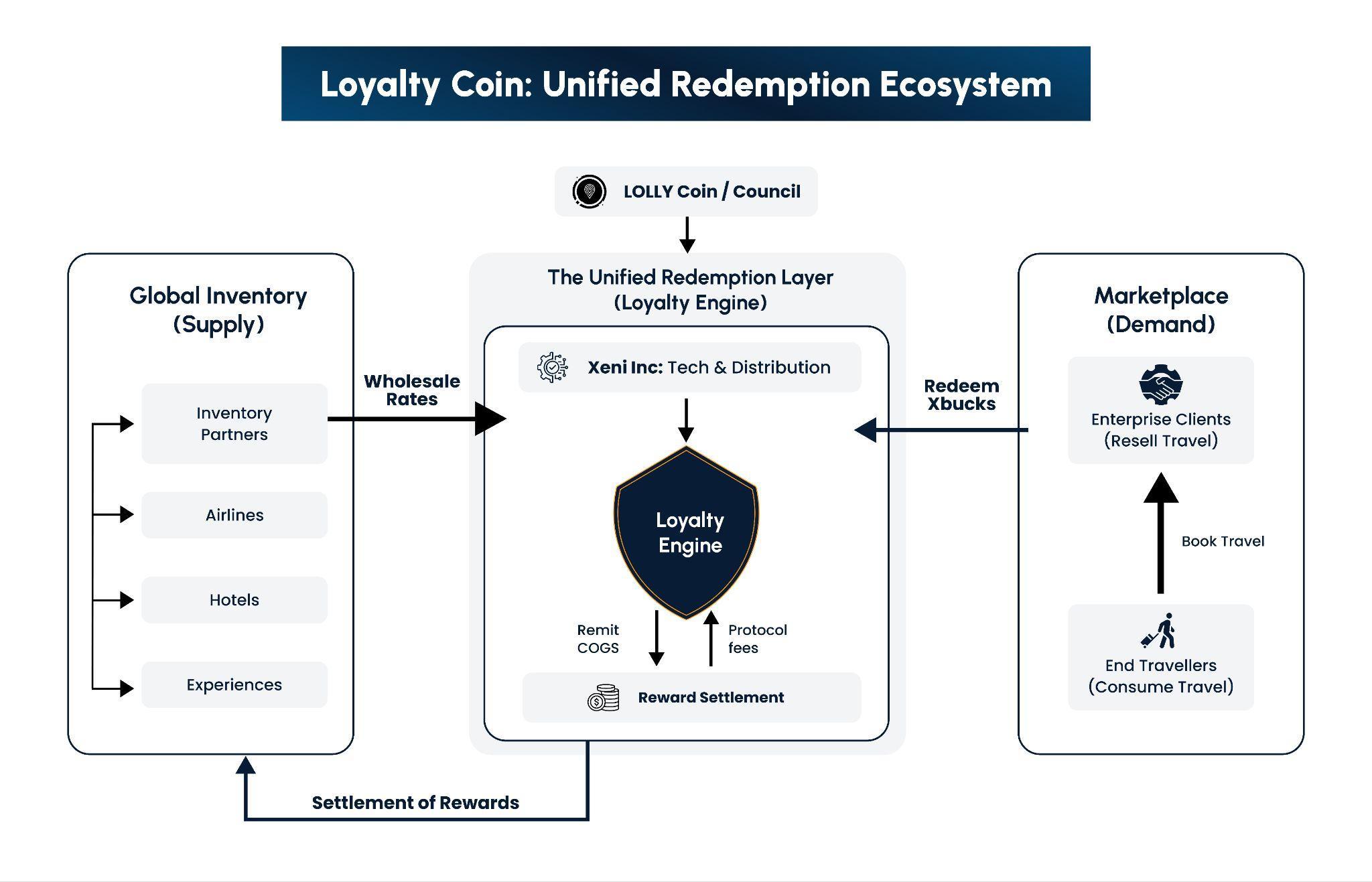
Loyalty Coin will administer the loyalty and rewards delivery mechanism on behalf of B2B clients, who will offer the rewards to their consumer audience.

Exhibit 4: Overview of the Loyalty Coin rewards system
A diagram of a flowchart
                
                AI-generated content may be incorrect.

4a. Built-in demand from LOLLY’s technology launch partner

Xeni is the global infrastructure layer powering modern travel commerce, delivering a world-class technology stack that connects suppliers, partners, and travelers worldwide. As the only full-stack travel reselling platform on the market, Xeni uniquely combines inventory aggregation, flexible multi-channel distribution, and seamless payments into a single unified system.

Xeni already has a scalable infrastructure that has aggregated global supply, including 2M+ hotels, 900+ airlines, international car rental pickups, activities, and vacation rentals worldwide. Xeni has hundreds of subscribers already using its APIs and other distribution solutions to resell this inventory to their bespoke audiences.

Xeni provides the travel commerce infrastructure used by major global players, including fintech platforms, superapps, and large university consortia. These companies are Xeni’s “subscribers” and offer travel services to their audiences (“travelers”).

Xeni has an existing customer base ready to adopt the Loyalty Coin services.  

Existing Xeni Subscriber

Community Size (traveler audience)

LatAm Conglomerate

80 million

US Universities Travel Manager

50 million

GCC Ecommerce & Fintech

30 million

Mexico Fintech

19 million

LatAm Fintech

6 million

GCC SuperApp

2 million

GCC Insurance Company

1 million

Every subscriber and traveler on the Xeni platform automatically receives a digital wallet. This wallet serves as the hub for managing loyalty, rewards, and credit features, enabling a unified, on-chain experience that strengthens engagement across the ecosystem.

The loyalty layer sits on top of the booking platform, much like how AAdvantage sits on top of American Airlines. Xeni is the launch partner for the Loyalty DAO, and Xeni’s subscribers will be the largest initial buyers of Xbucks, since Xeni’s users need loyalty points to use within the ecosystem. Xbucks can be white-labelled to match the loyalty subscriber’s branding.

4b. The importance of travel as a loyalty driver

Travel rewards are the most powerful driver of customer loyalty, far surpassing cash-back, merchandise, or gift cards. Decades of data from the credit card industry show that travel benefits consistently deliver the highest engagement, retention, and lifetime value.

Major issuers such as American Express, Chase, Capital One, and Citi anchor their flagship cards in travel rewards because consumers value travel points, miles, and experiences far more than cash. Customers will switch cards, consolidate spending, and increase overall use purely to earn travel benefits, making travel rewards the proven engine of loyalty across financial services and beyond.

These mega-cap issuers access travel at wholesale rates to reward their customers. The “wholesale purchase” of travel inventory, where Xeni Inc. operates, is a multibillion-dollar industry that connects financial institutions and retail giants to the travel industry. Through the DAO’s relationship with Xeni, clients will also have access to global wholesale inventory (discounted rates on most global brands for flights, hotels, car rentals, activities, resorts, and vacation rentals worldwide) that can be deployed through their own loyalty programs.

4c. Through Loyalty Coin, a broader swathe of companies worldwide can operate and profit from their own travel loyalty programs

By buying points in bulk, companies like Chase, Amex, and Capital One offer “aspirational” rewards to customers within their ecosystems. Banks are the largest buyers of airline miles and hotel points globally. They use these points to drive “top-of-wallet” behavior—ensuring you reach for their card instead of a competitor’s. E-commerce platforms use miles to bridge the gap between “mundane” shopping and “exciting” travel, making a standard purchase feel like a step toward a vacation.

These loyalty programs have outsized importance to travel inventory providers. For decades, the true profit engines of the travel industry haven’t been the airplanes or hotels, but the loyalty programs themselves. Programs like American Airlines’ AAdvantage (valued at up to $35 billion) and Delta’s SkyMiles (valued at around $28 billion) generate billions in annual cash flow and extraordinary 30–50% EBITDA margins.

However, these large global companies (e.g., airlines, hotel chains, and credit card companies) currently dominate loyalty programs. It is virtually impossible today for travel resellers (such as superapps or travel membership clubs) to embed their own loyalty rewards program across inventory categories on their own travel-selling site. Travelers also cannot apply their rewards across inventory types, limiting their value.

In short, loyalty programs today are not optimal for travelers or travel resellers:

  • Closed-loop system: points earned with one brand cannot be used with another brand.
  • Non-fungible economics: a point at Airline A ≠ , a point at Hotel B ≠ , a point at Card Issuer C.
  • Vertical silos: flights, hotels, experiences, cards, and merchants operate independently.
  • Loyalty programs are owned by inventory vendors, not by travel sellers.

4d. Strong subscriber demand for a fungible, universal travel loyalty product

Travel resellers are eager to embed a seamless rewards and loyalty program directly into their booking journeys.

But travel loyalty only works if it’s built on a real booking engine. Without integrated inventory, pricing, and redemption, travel rewards become expensive to deliver, hard to personalize, and frustrating for users—breaking the connection between earning and redeeming. Embedding the rewards engine within the booking flow makes travel incentives truly valuable, cost-effective, and scalable.

Xeni Inc.’s largest subscribers, including global megacorps, banks, fintechs, human resources managers, and superapps, have demanded a fungible, customizable rewards & loyalty program fully integrated with their travel booking ecosystem.  

Subscribers want to offer loyalty and rewards programs that span the entire travel journey—hotels, flights, car rentals, and experiences—under their own brand, rather than ceding customer ownership to airline- or hotel-controlled programs such as American AAdvantage or Marriott Bonvoy. Today’s fragmented loyalty landscape forces travelers to earn and redeem points within narrow, siloed ecosystems, limiting flexibility and weakening merchant-customer relationships.

Loyalty Coin’s Rewards & Loyalty platform will address an unmet market need, and its first ecosystem partner, Xeni Inc., will bring a ready-made user base on day 1.  

5. Why Blockchain?

By replacing fragmented legacy databases with a unified decentralized architecture, the DAO ecosystem streamlines the entire rewards lifecycle.  

5a. Solving the “Trust Paradox” (Interoperability)

In a traditional system, if an airline allows its users to redeem miles for a hotel stay, both companies must synchronize their internal databases, agree on an exchange rate, and trust each other’s accounting.

The blockchain/decentralized Solution: Xbucks acts as a decentralized clearinghouse. Every participant sees the same ledger. When a user redeems points, the transaction is immutable. No one can “double-spend” a reward, and no one has to wonder if the other party’s math is correct. It turns a fragmented mess of silos into a single, global “Rewards Internet.”

5b. Automated Economics (The Protocol Fee)

In legacy finance, collecting a small fee across thousands of international transactions would require a large accounting department, extensive invoicing, and high banking fees.

The blockchain/decentralized Solution: we use Smart Contracts. The 1.0–3.0% protocol fee isn’t “billed,” it is captured instantly by the code at the moment of redemption. As soon as a user clicks “Book,” the fee is automatically routed to the Loyalty Coin treasury. It is transparent, audit-proof, and requires zero human intervention.

5c. Simplifying the Redemption Process (Instant and Fungible)

Conventional rewards programs are historically defined by “closed ecosystems,” where value is trapped within a specific airline or hotel chain, forcing users to navigate cumbersome redemption portals, limited availability, and frustrating processing delays. These silos create a fragmented experience where points lack real-world versatility.

LOLLY dismantles these barriers by introducing a model where rewards are truly fungible across all product categories. By using a decentralized infrastructure, LollyCoin enables the instant conversion and application of rewards directly on the Xeni Inc. platform (or other future ecosystem partners). This removes the “clunky” middleman, allowing the travelers to earn value in one area and immediately apply it to flights, hotels, or car rentals with zero lag, transforming a static loyalty balance into a fluid, spendable asset.

5d. Turning Liabilities into Liquidity (Tokenization)

For enterprise subscribers, managing a loyalty program traditionally introduces a significant long-term liability on the balance sheet, as the company must reserve capital to cover the future cost of point redemptions. This burden is compounded by the operational “cold start” problem: the need to build or negotiate a vast vendor network where users can actually spend those points.

LOLLY elegantly solves both sides of this equation. By migrating loyalty tracking to a decentralized ledger, the accounting is handled transparently and autonomously, shifting the management of the reward lifecycle off the corporate books and onto the blockchain. Furthermore, it provides an immediate “plug-and-play” outlet for these rewards: instead of the enterprise subscriber having to build their own marketplace, users gain access to a built-in redemption engine with global travel inventory, turning a static corporate liability into a dynamic, liquid asset for consumers.

6. White-labeled on-chain loyalty points

LollyCoin offers a standardized, universal loyalty platform that allows rewards to be earned and redeemed seamlessly across travel verticals. This model restores control of customer engagement to the seller while delivering a simpler, more valuable rewards experience for travelers. This utility token (on-chain loyalty points) is generically called Xbucks but can be white-labeled for each corporate client.

6a. How Xbucks Standardizes Loyalty  

  • Xbucks defines a standard unit of account (1 Xbuck = 1 Unit of Loyalty Value)
  • Subscribers can define their earning logic on a custom basis
  • Redemption pricing is consistent across verticals as defined by the DAO
  • Users maintain a universal wallet with Xbucks that can be applied across travel verticals

6b. How travelers and subscribers acquire Xbucks

The Loyalty DAO will control the flow, pricing, and administration of Xbucks, the utility token that underpins the rewards & loyalty platform.  Authorized users (subscribers) can acquire Xbucks and distribute them in two ways:

  1. Subscribers can distribute Xbucks to their travelers as an incentive to book:

Subscribers can acquire Xbucks and distribute them directly to their travelers’ wallets as an incentive to book.  This would be similar to the “sign-up credit” a new user might get from an online marketplace or digital wallet.  

  1. Subscribers can let their users earn through activity

Subscribers can fund a loyalty program for their users by pre-purchasing Xbucks, which can be redeemed as rewards when travelers book.  This system functions exactly like traditional loyalty programs, but with Xbucks as the universal, fungible reward.

7. LOLLY Core Principles

Loyalty Coin establishes the rules, incentives, and strategic direction at the protocol layer and engages with ecosystem partners, such as Xeni Inc., to deliver services. This structure ensures transparent, community-driven governance alongside professional execution for partners and users. Critically, LOLLY can welcome additional ecosystem partners—participation is open, not exclusive—creating a collaborative and expansive network.

7a.  Governance & Autonomy (The DAO Foundation)

The LollyCoin operates on a hybrid governance model designed to ensure both community agency and project stability.

  • Participation is anchored by LOLLY, where voting power is directly proportional to holdings: one coin equals one vote. This ensures that those with a vested interest in the ecosystem have a direct say in its evolution. A simple majority will determine which proposals will be presented to the Council.
  • To maintain strategic alignment and protect the treasury from malicious or redundant proposals, LollyCoin utilizes a dual-layer process. Before a proposal reaches the community for a general vote, it must first be reviewed and sanctioned by an Appointed Council. This council acts as a quality-control filter, verifying that all requests are technically viable and align with the long-term mission before they are moved to the floor for a final democratic decision.

Transparency and Auditability: All key governance actions (proposals, votes, treasury movements) and protocol logic (how Xbucks are validated and settled) must be recorded on the ledger and be publicly verifiable.

Code-Based Autonomy: the core functions of the DAO—specifically the validation and settlement of redemptions—should be executed automatically by self-enforcing smart contracts. The DAO operates autonomously under the community’s voted-upon rules.

7b. Loyalty & Economic Alignment (The Loyalty Program Focus)

These principles ensure the loyalty program is competitive and fair for both users and the ecosystem partners.

User Value & Trustless Redemption: The primary goal is to empower the end user with a valuable, flexible loyalty token (Xbucks) that can be redeemed under clear, immutable rules set by the community, not a centralized corporation.

Protocol Sustainability: The 1–3% Protocol Fee ensures the LOLLY treasury is perpetually funded. This treasury exists to fund necessary protocol development, security audits, and incentives for LOLLY holders.  By DAO vote, the proceeds from fees can be utilized for token repurchase.  

Partner Alignment: The protocol will maintain a fair and attractive relationship with its ecosystem partners and Enterprise Clients, ensuring they continue to use the platform by incentivizing efficiency and transparency in the decentralized loyalty system.

7c. Growth & Ecosystem Development

Ensure the protocol is adaptable and future-proof through community-driven governance and rapid iteration based on proposals. Maintain a governance model that encourages participation from all ecosystem stakeholders (holders, clients, and users) for robust, well-rounded decision-making.

7d. Tokenomics

Total supply: 10,000,000,000

Allocation Group

Proposed Percentage

Vesting Details

Purpose

Community

[10%]

Straightline monthly unlock over 5 years

Distributed for marketing, grants, and staking rewards.

Treasury

[33%]

Straightline monthly unlock over 5 years

Funds future ecosystem growth.  By DAO vote, proceeds from fees could be directed to token repurchase.

Ecosystem Development & Partnerships

[32]%

Straightline annual unlock over 5 years

Strategic reserves for integrating new partners (like new suppliers or tech providers) and funding Xeni Inc.’s development of protocol infrastructure.

Founders & Team

[10]%

1-year cliff, 4-year linear vest.

Rewards core contributors and aligns them for the long term.

Private/Seed Investors

[5]%

18-month cliff, 3-year linear vest.

Provides initial funding and liquidity.

Liquidity

[5%]

0-month cliff, 6 month vesting

Market makers

Public Sale

[5]%

Immediate liquidity

Token Generation Event (TGE)

LOLLY token launch table:

Token Name

Loyalty Coin

Ticker

LOLLY

Total Supply

10,000,000,000 (10 Billion)

Standard

ERC-20 / HTS (Hedera Token Service)

Primary Utility

Travel arbitrage, rewards and loyalty, governance.

8. Summary

LollyCoin combines:

  • Airline-style loyalty economics
  • Amex-style partner funding
  • Decentralized governance

This creates the first resellable loyalty system for the entire travel ecosystem, not just one airline or hotel chain.

X-Bucks can become the world’s most flexible travel reward.  Loyalty Coin serves as the governance layer for its economics.

Appendix:


The Global Buyers of Airline & Hotel Loyalty Points — Beyond Banks:

Airlines & Hotels

British Airways, Qatar Airways, Marriott, Hilton, Uber, Lyft

Build cross-earn ecosystems, boost partner loyalty, and increase travel frequency

Online Travel Agencies (OTAs)

Expedia, Booking.com, Trip.com

Drive repeat bookings, differentiate in a commoditized market

Retail & E-Commerce

Amazon (Shop with Points), Starbucks, Walmart, Wallmart, Amazon, etc.

Travel rewards create higher emotional value than discounts

Telecom & Mobile Carriers

T-Mobile, Verizon, Virgin Mobile

Reduce subscriber churn, increase app usage

Mobility & Super Apps

Uber (Bonvoy), Lyft (SkyMiles), Grab, Gojek

Increase trip frequency and platform stickiness

Corporate Travel Cards

CWT, AMEX, GBT, Chase, Capital One, and other

Retain enterprise clients, incentivize policy compliance

Fuel & Car Rental Brands

BP Rewards (United/Alaska), Hertz (Delta/United)

Tie everyday spending to aspirational travel rewards

Sports Teams & Entertainment

NBA teams, Live Nation

Improve fan engagement through experiential rewards

Loyalty Aggregators & Platforms

Points.com, Collinson Group, Aimia

Buy and resell points; power third-party loyalty programs

Glossary

Subscriber/Enterprise Client: Loyalty program subscriber (payors of SaaS fees for loyalty product)

Ecosystem partner: provider of travel or other inventory

Traveler: end user of rewards redemption  


  1. https://www.customerexperiencedive.com/news/delta-loyalty-program-premium-services-revenue-gains/737099/ - Source for Delta Sky miles program valuation
  2. https://sherwood.news/business/new-pass-access-american-airlines-loyalty-program-will-cost-usd5000/?utm_source=chartr&utm_medium=email&utm_campaign=chartr_20251212
  3. https://www.travelweekly.com/Travel-News/Airline-News/AAdvantage-Pass-introduced?utm_source=chartr&utm_medium=email&utm_campaign=chartr_20251212
  4. Point.me 

Loyalty Coin - LOLLY
Loyalty Coin (LOLLY)


Unlocking the Next Era of Hospitality Rewards


Loyalty Coin “LOLLY” - A global loyalty infrastructure for modern1 travel commerce

1. Introduction

The most profitable travel loyalty programs in the world—such as American Airlines AAdvantage, Delta SkyMiles, United MileagePlus, and Marriott Bonvoy—are not primarily profit centers because of travel redemptions. They are profit centers because they sell loyalty currency (points or miles) to third-party businesses, who then use those points to incentivize their own customers.

These loyalty rewards programs remain siloed within individual airlines, hotel brands, and banks, and are largely inaccessible to the broader travel ecosystem.

At the same time, global platforms—ranging from fintechs and superapps to enterprise marketplaces—are seeking to resell travel as a new revenue stream to their existing captive audiences, while retaining ownership and control over the customer relationship through a bespoke rewards experience embedded directly into the booking flow.

The Loyalty Coin “LOLLY” addresses this structural gap by introducing a resellable, interoperable loyalty layer spanning the entire travel stack and remaining fungible across inventory categories, including flights, hotels, activities, events, and ground transportation.

The Loyalty DAO will capitalize on the built-in demand from the customer base of its launch partner, Xeni Inc. Xeni is a travel technology platform with an existing, live subscriber base that includes global megacorps, banks, fintechs, human resources managers, and superapps. Collectively, these subscribers bring an audience of over 100+ million users (“travelers”).  These subscribers have demanded a fungible, customizable rewards & loyalty program that is fully integrated with their travel booking ecosystem.  

Exhibit 1: Overview of the Loyalty Coin rewards system

The system consists of:

  • LOLLY token → EVM-compatible reward-earning and voting token
  • Loyalty DAO → Governance + revenue-earning organization
  • Xbucks → On-chain reward points
  • Xeni API platform → Global inventory partner
  • Decentralized ledger → Immutable auditability + transparency

2. Loyalty Coin Overview

2a) LOLLY

LOLLY is the access and voting token for Loyalty DAO, the economic beneficiary of the loyalty and rewards ecosystem. LOLLY holders collectively shape economic, operational, and strategic decisions through on-chain governance.  LOLLY holders have the option to stake in an arbitrage liquidity pool.  

LOLLY enables token holders to propose, vote on, and approve key decisions, including loyalty program parameters, redemption economics, partner onboarding frameworks, treasury allocation, incentive structures, and protocol upgrades. This ensures that the evolution of the hospitality rewards ecosystem is community-driven, transparent, and aligned with long-term value creation. 

2b) Governance

LOLLY holders govern a rewards and loyalty program for the travel industry and oversee the issuance and redemption of the on-chain reward points.

  • Xbucks Issuance/Minting Policy: A standardized smart contract protocol governs the mechanism for introducing new Xbucks rewards points into the ecosystem, ensuring transparency and economic stability.
  • Voting rights:  LOLLY holders can determine the parameters and extent of DAO business activities including operations, development, and growth initiatives (e.g., grant funding).
  • Treasury management: determine uses of LOLLY treasury including funding initiatives.  

Exhibit 2: governance flow

2c) Rewards strategy

The LOLLY rewards strategy is designed to incentivize participation, govern system economics, and provide tangible benefits to LOLLY holders.

  • Protocol Sustainability (The Protocol Fee)
  • The Loyalty DAO’s treasury is funded by a Protocol Fee (1.0–3.0%) earned on all loyalty redemptions within the ecosystem, ensuring continuous funding for development and security.
  • Staking Benefits for LOLLY Holders
  • Wholesale Travel Discounts: LOLLY holders who stake a certain amount of LOLLY gain access to wholesale-rate travel inventory while assets are staked.
  • Exclusive access and rewards: free membership in private travel perks and content club, featuring exclusive partnerships with global wellness, hospitality and fitness brands.  
  • Option to purchase exclusive benefits with LOLLY: holders can elect to return their coins to the treasury in exchange for unique travel experiences (exclusive resorts, premium flights, etc.)
  • The minimum stake threshold is 10,000 LOLLY
  • Minimum staking period is 30 days, and the unlock period is 7 days
  • Staking Rewards and Vesting Tiers for the arbitrage pool
  • Arbitrage Pool Participation:
  • The Arbitrage Liquidity Pool by Lollycoin identifies and capitalizes on high-demand market "spikes" where hotel room rates soar during major events, such as SXSW, the F1 Grand Prix, or international sports finals. The process begins with AI monitoring and modeling to identify target markets and map current room prices against historical averages.
  • Once an opportunity is green-lit, the pool issues a capital call to participants to pre-buy inventory using Xeni infrastructure. These rooms are then re-sold through a two-pronged distribution model—targeting both direct loyalty travelers and mass distribution via global channel managers—with final profits distributed back to investors via smart contracts.
  • Investors who wish to participate in the inventory arbitrage liquidity pools (which pre-purchase and tokenize inventory) must stake LOLLY. The required stake is 1/10th of their desired USD investment in the pool.
  • Pool participants fund the pool in USD and achieve a realized return at the conclusion of the strategy.

2d) LOLLY ecosystem participants

Participant

Token/Action

Incentive/Benefit

LOLLY Holders

Governance (Staking/Voting)

Control over governance.

Enterprise Clients

Buyers of Xbucks

Purchase Xbucks as a loyalty-related marketing expense.  

Travelers

Earning/Redeeming Xbucks

Earn fungible rewards and discounts across inventory categories.

Xeni Inc. + n (Ecosystem Partners) Open Source

Providing a client base, booking technology, and travel inventory

Partners deliver the ecosystem with client demand for Xbucks, booking technology, and underlying travel inventory.

3. Ecosystem partner platform overview

Loyalty Coin will administer the loyalty and rewards delivery mechanism to ecosystem partners.  

The DAO’s first ecosystem partner will be Xeni, Inc.  Xeni is the global infrastructure layer powering modern travel commerce, delivering a world-class technology stack that connects suppliers, partners, and travelers worldwide. As the only full-stack travel reselling platform on the market, Xeni uniquely combines inventory aggregation, flexible multi-channel distribution, and seamless payments into a single unified system.

Xeni already has a scalable infrastructure that has aggregated global supply, including 2M+ hotels, 900+ airlines, international car rental pickups, activities, and vacation rentals worldwide.  Xeni has hundreds of subscribers already using its APIs and other distribution solutions to resell this inventory to their bespoke audiences.

Exhibit 3: Xeni Inc. Architecture

A diagram of a flowchart
                
                AI-generated content may be incorrect.

Xeni provides the travel commerce infrastructure used by major global players, including fintech platforms, superapps, and large university consortia. These companies are Xeni’s “subscribers” and offer travel services to their audiences (“travelers”).  

Xeni has an existing customer base ready to adopt the Loyalty Coin services.  

Existing Xeni Subscriber

Community Size (traveler audience)

LatAm Conglomerate

80 million

US Universities Travel Manager

50 million

GCC Ecommerce & Fintech

30 million

Mexico Fintech

19 million

LatAm Fintech

6 million

GCC SuperApp

2 million

GCC Insurance Company

1 million

Every subscriber and traveler on the Xeni platform automatically receives a digital wallet. This wallet serves as the hub for managing loyalty, rewards, and credit features, enabling a unified, on-chain experience that strengthens engagement across the ecosystem.

The loyalty layer sits on top of the booking platform, much like how AAdvantage sits on top of American Airlines. Xeni is the launch partner for the Loyalty DAO, and Xeni’s subscribers will be the largest initial buyers of Xbucks, since Xeni’s users need loyalty points to use within the ecosystem.  Xbucks can be white-labelled to match the loyalty subscriber’s branding.

Exhibit 4: Xbucks and fund flows between Xeni Inc. Subscribers and LOLLY

4.  Universal Loyalty Product

Loyalty Coin will administer the loyalty and rewards delivery mechanism on behalf of B2B clients, who will offer the rewards to their consumer audience.

4a) The importance of travel as a loyalty driver

Travel rewards are the most powerful driver of customer loyalty, far surpassing cash-back, merchandise, or gift cards. Decades of data from the credit card industry show that travel benefits consistently deliver the highest engagement, retention, and lifetime value.

Major issuers such as American Express, Chase, Capital One, and Citi anchor their flagship cards in travel rewards because consumers value travel points, miles, and experiences far more than cash. Customers will switch cards, consolidate spending, and increase overall use purely to earn travel benefits, making travel rewards the proven engine of loyalty across financial services and beyond.

These mega-cap issuers access travel at wholesale rates to reward their customers.  The “wholesale purchase” of travel inventory, where Xeni Inc. operates, is a multi-billion-dollar industry that connects financial institutions and retail giants to travel. Through the DAO’s relationship with Xeni, clients will also have access to global wholesale inventory (discounted rates on most global brands for flights, hotels, car rentals, activities, resorts, and vacation rentals worldwide) that can be deployed through their own loyalty programs.

4b) Through Loyalty Coin, a broader swathe of companies worldwide can operate and profit from their own travel loyalty programs

By buying points in bulk, companies like Chase, Amex, and Capital One offer “aspirational” rewards to customers within their ecosystems.  Banks are the largest buyers of airline miles and hotel points globally. They use these points to drive “top-of-wallet” behavior—ensuring you reach for their card instead of a competitor’s.  E-commerce platforms use miles to bridge the gap between “mundane” shopping and “exciting” travel, making a standard purchase feel like a step toward a vacation.

These loyalty programs have outsized importance to travel inventory providers. For decades, the true profit engines of the travel industry haven’t been the airplanes or hotels, but the loyalty programs themselves. Programs like American Airlines’ AAdvantage (valued at up to $35 billion) and Delta’s SkyMiles (valued at around $28 billion) generate billions in annual cash flow and extraordinary 30–50% EBITDA margins.

However, these giant global companies (e.g., airlines, hotel chains, or credit card companies) currently monopolize loyalty programs.  It is virtually impossible today for travel resellers (such as superapps or travel membership clubs) to embed their own loyalty rewards program across inventory categories on their own travel-selling site. Travelers also cannot apply their rewards across inventory types, limiting their value.

In short, loyalty programs today are not optimal for travelers or travel resellers:

  • Closed-loop system: points earned with one brand cannot be used with another brand.
  • Non-fungible economics: a point at Airline A ≠ , a point at Hotel B ≠ , a point at Card Issuer C.
  • Vertical silos: flights, hotels, experiences, cards, and merchants operate independently.
  • Loyalty programs are owned by inventory vendors, not by travel sellers.

4c) Strong subscriber demand for a fungible, universal travel loyalty product

Travel resellers are eager to embed a seamless rewards and loyalty program directly into their booking journeys.

But travel loyalty only works if it’s built on a real booking engine. Without integrated inventory, pricing, and redemption, travel rewards become expensive to deliver, hard to personalize, and frustrating for users—breaking the connection between earning and redeeming. Embedding the rewards engine within the booking flow makes travel incentives truly valuable, cost-effective, and scalable.

Xeni Inc.’s largest subscribers, including global megacorps, banks, fintechs, human resources managers, and superapps, have demanded a fungible, customizable rewards & loyalty program fully integrated with their travel booking ecosystem.  

Subscribers want to offer loyalty and rewards programs that span the entire travel journey—hotels, flights, car rentals, and experiences—under their own brand, rather than ceding customer ownership to airline- or hotel-controlled programs such as American AAdvantage or Marriott Bonvoy. Today’s fragmented loyalty landscape forces travelers to earn and redeem points within narrow, siloed ecosystems, limiting flexibility and weakening merchant-customer relationships.

Loyalty Coin’s Rewards & Loyalty platform will address an unmet market need, and its first ecosystem partner, Xeni Inc., will bring a ready-made user base on day 1.  

5) Why Blockchain?

By replacing fragmented legacy databases with a unified decentralized architecture, the DAO ecosystem streamlines the entire rewards lifecycle.  

5a) Solving the “Trust Paradox” (Interoperability)

In a traditional system, if an airline allows its users to redeem miles for a hotel stay, both companies must synchronize their internal databases, agree on an exchange rate, and trust each other’s accounting.

The blockchain/decentralized Solution: Xbucks acts as a decentralized clearinghouse. Every participant sees the same ledger. When a user redeems points, the transaction is immutable. No one can “double-spend” a reward, and no one has to wonder if the other party’s math is correct. It turns a fragmented mess of silos into a single, global “Rewards Internet.”

5b) Automated Economics (The Protocol Fee)

In legacy finance, collecting a small fee across thousands of international transactions would require a large accounting department, extensive invoicing, and high banking fees.

The blockchain/decentralized Solution: we use Smart Contracts. The 1.0–3.0% protocol fee isn’t “billed,” it is captured instantly by the code at the moment of redemption. As soon as a user clicks “Book,” the fee is automatically routed to the Loyalty Coin treasury. It is transparent, audit-proof, and requires zero human intervention.

5c) Simplifying the Redemption Process (Instant and Fungible)

Conventional rewards programs are historically defined by “closed ecosystems,” where value is trapped within a specific airline or hotel chain, forcing users to navigate cumbersome redemption portals, limited availability, and frustrating processing delays. These silos create a fragmented experience where points lack real-world versatility.

LOLLY dismantles these barriers by introducing a model where rewards are truly fungible across all product categories. By using a decentralized infrastructure, LollyCoin enables the instant conversion and application of rewards directly on the Xeni Inc. platform (or other future ecosystem partners). This removes the “clunky” middleman, allowing the travelers to earn value in one area and immediately apply it to flights, hotels, or car rentals with zero lag, transforming a static loyalty balance into a fluid, spendable asset.

5d) Turning Liabilities into Liquidity (Tokenization)

For enterprise subscribers, managing a loyalty program traditionally introduces a significant long-term liability on the balance sheet, as the company must reserve capital to cover the future cost of point redemptions. This burden is compounded by the operational “cold start” problem: the need to build or negotiate a vast vendor network where users can actually spend those points.

LOLLY elegantly solves both sides of this equation. By migrating loyalty tracking to a decentralized ledger, the accounting is handled transparently and autonomously, shifting the management of the reward lifecycle off the corporate books and onto the blockchain. Furthermore, it provides an immediate “plug-and-play” outlet for these rewards: instead of the enterprise subscriber having to build their own marketplace, users gain access to a built-in redemption engine with global travel inventory, turning a static corporate liability into a dynamic, liquid asset for consumers.

6. XBucks - On-chain loyalty points

LollyCoin offers a standardized, universal loyalty platform that allows rewards to be earned and redeemed seamlessly across travel verticals. This model restores control of customer engagement to the seller while delivering a simpler, more valuable rewards experience for travelers.  This utility token (on-chain loyalty points) is called Xbucks.

6a) How Xbucks Standardizes Loyalty  

  • Xbucks defines a standard unit of account (1 Xbuck = 1 Unit of Loyalty Value)
  • Subscribers can define their earning logic on a custom basis
  • Redemption pricing is consistent across verticals as defined by the DAO
  • Users maintain a universal wallet with Xbucks that can be applied across travel verticals

6b) How travelers and subscribers acquire Xbucks

The Loyalty DAO will control the flow, pricing, and administration of Xbucks, the utility token that underpins the rewards & loyalty platform.  Authorized users (subscribers) can acquire Xbucks and distribute them in two ways:

  1. Subscribers can distribute Xbucks to their travelers as an incentive to book:

Subscribers can acquire Xbucks and distribute them directly to their travelers’ wallets as an incentive to book.  This would be similar to the “sign-up credit” a new user might get from an online marketplace or digital wallet.  

  1. Subscribers can let their users earn through activity

Subscribers can fund a loyalty program for their users by pre-purchasing Xbucks, which can be redeemed as rewards when travelers book.  This system functions exactly like traditional loyalty programs, but with Xbucks as the universal, fungible reward.

7. LOLLY Core Principles

Loyalty Coin establishes the rules, incentives, and strategic direction at the protocol layer and engages with ecosystem partners, such as Xeni Inc., to deliver services. This structure ensures transparent, community-driven governance alongside professional execution for partners and users. Critically, LOLLY can welcome additional ecosystem partners—participation is open, not exclusive—creating a collaborative and expansive network.

7a)  Governance & Autonomy (The DAO Foundation)

The LollyCoin operates on a hybrid governance model designed to ensure both community agency and project stability.

  • Participation is anchored by LOLLY, where voting power is directly proportional to holdings: one coin equals one vote. This ensures that those with a vested interest in the ecosystem have a direct say in its evolution. A simple majority will determine which proposals will be presented to the Council.
  • To maintain strategic alignment and protect the treasury from malicious or redundant proposals, LollyCoin utilizes a dual-layer process. Before a proposal reaches the community for a general vote, it must first be reviewed and sanctioned by an Appointed Council. This council acts as a quality-control filter, verifying that all requests are technically viable and align with the long-term mission before they are moved to the floor for a final democratic decision.

Transparency and Auditability: All key governance actions (proposals, votes, treasury movements) and protocol logic (how Xbucks are validated and settled) must be recorded on the ledger and be publicly verifiable.

Code-Based Autonomy: the core functions of the DAO—specifically the validation and settlement of redemptions—should be executed automatically by self-enforcing smart contracts. The DAO operates autonomously under the community’s voted-upon rules.

7b) Loyalty & Economic Alignment (The Loyalty Program Focus)

These principles ensure the loyalty program is competitive and fair for both users and the ecosystem partners.

User Value & Trustless Redemption: The primary goal is to empower the end user with a valuable, flexible loyalty token (Xbucks) that can be redeemed under clear, immutable rules set by the community, not a centralized corporation.

Protocol Sustainability: The 1–3% Protocol Fee ensures the LOLLY treasury is perpetually funded. This treasury exists to fund necessary protocol development, security audits, and incentives for LOLLY holders.  By DAO vote, the proceeds from fees can be utilized for token repurchase.  

Partner Alignment: The protocol will maintain a fair and attractive relationship with its ecosystem partners and Enterprise Clients, ensuring they continue to use the platform by incentivizing efficiency and transparency in the decentralized loyalty system.

7c) Growth & Ecosystem Development

Ensure the protocol is adaptable and future-proof through community-driven governance and rapid iteration based on proposals. Maintain a governance model that encourages participation from all ecosystem stakeholders (holders, clients, and users) for robust, well-rounded decision-making.

7d) Tokenomics

Total supply: 10,000,000,000

Allocation Group

Proposed Percentage

Vesting Details

Purpose

Community

[10%]

Straightline monthly unlock over 5 years

Distributed for marketing, grants, and staking rewards.

Treasury

[33%]

Straightline monthly unlock over 5 years

Funds future ecosystem growth.  By DAO vote, proceeds from fees could be directed to token repurchase.

Ecosystem Development & Partnerships

[32]%

Straightline annual unlock over 5 years

Strategic reserves for integrating new partners (like new suppliers or tech providers) and funding Xeni Inc.’s development of protocol infrastructure.

Founders & Team

[10]%

1-year cliff, 4-year linear vest.

Rewards core contributors and aligns them for the long term.

Private/Seed Investors

[5]%

18-month cliff, 3-year linear vest.

Provides initial funding and liquidity.

Liquidity

[5%]

Market makers

Ensures healthy initial market circulation and price discovery.

Public Sale / Liquidity

[5]%

Token Generation Event (TGE).

Provide initial liquidity to holders.

LOLLY token launch table:

Token Name

Loyalty Coin

Ticker

LOLLY

Total Supply

10,000,000,000 (10 Billion)

Standard

ERC-20 / HTS (Hedera Token Service)

Primary Utility

Travel arbitrage, rewards and loyalty, governance.

8. Summary

LollyCoin combines:

  • Airline-style loyalty economics
  • Amex-style partner funding
  • Decentralized governance

This creates the first resellable loyalty system for the entire travel ecosystem, not just one airline or hotel chain.

X-Bucks can become the world’s most flexible travel reward.  Loyalty Coin serves as the governance layer for its economics.

Appendix:


The Global Buyers of Airline & Hotel Loyalty Points — Beyond Banks:

Airlines & Hotels

British Airways, Qatar Airways, Marriott, Hilton, Uber, Lyft

Build cross-earn ecosystems, boost partner loyalty, and increase travel frequency

Online Travel Agencies (OTAs)

Expedia, Booking.com, Trip.com

Drive repeat bookings, differentiate in a commoditized market

Retail & E-Commerce

Amazon (Shop with Points), Starbucks, Walmart, Wallmart, Amazon, etc.

Travel rewards create higher emotional value than discounts

Telecom & Mobile Carriers

T-Mobile, Verizon, Virgin Mobile

Reduce subscriber churn, increase app usage

Mobility & Super Apps

Uber (Bonvoy), Lyft (SkyMiles), Grab, Gojek

Increase trip frequency and platform stickiness

Corporate Travel Cards

CWT, AMEX, GBT, Chase, Capital One, and other

Retain enterprise clients, incentivize policy compliance

Fuel & Car Rental Brands

BP Rewards (United/Alaska), Hertz (Delta/United)

Tie everyday spending to aspirational travel rewards

Sports Teams & Entertainment

NBA teams, Live Nation

Improve fan engagement through experiential rewards

Loyalty Aggregators & Platforms

Points.com, Collinson Group, Aimia

Buy and resell points; power third-party loyalty programs

Glossary

Subscriber/Enterprise Client: Loyalty program subscriber (payors of SaaS fees for loyalty product)

Ecosystem partner: provider of travel or other inventory

Traveler: end user of rewards redemption  


  1. https://www.customerexperiencedive.com/news/delta-loyalty-program-premium-services-revenue-gains/737099/ - Source for Delta Sky miles program valuation
  2. https://sherwood.news/business/new-pass-access-american-airlines-loyalty-program-will-cost-usd5000/?utm_source=chartr&utm_medium=email&utm_campaign=chartr_20251212
  3. https://www.travelweekly.com/Travel-News/Airline-News/AAdvantage-Pass-introduced?utm_source=chartr&utm_medium=email&utm_campaign=chartr_20251212
  4. Point.me